
These are my past newsletters
-
Feeling like your body changed the rules after 40?
…Well, it did - and no one gave us the manual!Let’s be real for a sec — unless you’re ready to learn the new rules and tweak a few habits, no one (not even your favourite wellness guru!) can do it for you.
Tough love moment, I know!
But here’s the magic part:
you’re the captain of your own ship. You get to decide where it sails and how good the ride feels.
And that, my friend, is fantastic news!
You’re in charge — body, mind, and midlife reboot.
So grab the wheel…
...we’re going somewhere amazing :)
What You’ll Find in My Wellness Journal
I’m sharing my real-time journey — how I’m finally sleeping better, surviving the Candida detox palaver, managing histamine highs and lows, balancing those midlife hormones, and learning how to lose the “stubborn pounds” without losing my joy.
If you’re a woman over 40 who’s ready to ditch fatigue, bloating, mood swings, and confusion — you’re in the right place.
What to Expect Each Week
Honest updates from my Wellness Journal — what’s working and what’s still in progress.
My favourite supplements and natural remedies that actually move the needle.
Midlife mindset shifts (and the occasional laugh about detox side effects).
Because midlife can feel amazing once you learn to work with your body, not against it.
Check out myrecent postsabout how I finally nailedbetter sleepin midlife, the real deal behindCandida overgrowthandhistamine sensitivity (and why you might have them), and what worked (and what didn’t) in my gut-healing journey.
Or just hit reply and tell me one thing you’re struggling with right now — I might feature it in next week’s diary!
💖 Stay sparkly,😊
Izzy x
-
Hi,
If you’re like me, you want to feel healthy, light, energised, and strong at midlife - without turning your whole life upside down.
Well… here’s a secret that made a huge difference for me:
Choosing organic whenever possible.
Before you roll your eyes (I get it - it sounds expensive, complicated, or “too wellness-guru”), let me tell you this:
Organic eating is one of the simplest, most powerful ways to support your body after 40.
Especially when hormones, metabolism, and energy aren’t behaving like they used to.
Let’s break it down…
Why Organic Food Really Supports Women Over 40
Fewer Chemicals = Happier Hormones
Pesticides can mimic oestrogen, confuse your endocrine system, and make symptoms like bloating, weight gain, mood swings, or fatigue even worse.
Organic means less toxic load, which means your body can actually focus on balancing hormones - not fighting chemicals.
Better for Weight Loss & Metabolism
A body overloaded with toxins holds onto fat more easily.
Organic foods reduce that burden, support the liver, and help your metabolism run smoothly.If you’ve ever felt like:
“I’m doing everything right but still not losing weight…”
- this could be part of the reason.More Nutrients = More Energy
Studies show organic fruit and veg can contain higher antioxidants.
This means less inflammation, more energy, and better skin (hello glow).
Your Gut Will Thank You
Midlife gut health gets… interesting.
Organic foods contain fewer irritants and support a healthier microbiome — especially important if you deal with histamine issues or past Candida (hi, us!).
Want my full organic guide?
I’ve put everything in one place:
✔ what’s worth buying organic
✔ what’s safe to buy non-organic
✔ how to save money
✔ how to start small
✔ what I personally buy every weekClick here to read it:
While you're here…
If you want more natural wellness tips for women over 40 - from hormones to histamine to weight loss - everything is waiting for you on my homepage.
Browse all topics here:
Thank you for being part of this little midlife wellness circle.We’re doing this together — naturally, joyfully, and without perfection.
See you inside,
💖 Stay sparkly,😊
Izzy x
Grab the wheel .....
...we’re going somewhere amazing :)
-
Hi,
Today we’re diving into something I truly think every woman over 40 should have in her wellness toolkit:
Adaptogenic herbs — your new emotional support squad. If you’ve ever thought: “Is it me… or is stress just louder now?” then adaptogens were literally invented by nature for this moment in your life.
Let’s break it down fast and fun: So… what are adaptogens and how do they work?
Adaptogens are special herbs that help your body stay stable (and sane) during stress. They work by supporting your HPA axis — your brain’s stress thermostat.
When stress hits, your body lights up like a Christmas tree: cortisol spikes, mood dips, sleep gets messy, hormones start playing musical chairs.
Adaptogens help by:
1. Balancing cortisol. Instead of letting stress run the show, they help regulate your response so you stay calm, focused, and less reactive.
2. Supporting your adrenal system. If you’re tired all the time (yet wired at night), your adrenals need TLC. Adaptogens help them recover and recharge.
3. Boosting energy — without stimulants. They don’t push your body; they support it, so you get steady, natural energy instead of caffeine chaos.
4. Helping your hormones stay steadier. Less anxiety. Fewer mood swings. More emotional resilience. They don’t “fix” hormones — they help your body respond better to hormonal changes.
5. Improving your stress recovery time This is the magic: they help you bounce back faster. Life still happens… but you don’t crumble as easily.
Basically: They help your body adapt — mentally, physically, emotionally — so you feel like YOU again.
Meet the Herbal Dream Team.
In the full blog post, I break down the six best ones for women over 40:
Ashwagandha — calm, mood, sleep, cortisol.
Rhodiola — energy + mental clarity
Holy Basil — anxiety + emotional steadiness
Schisandra — hormones + liver support + glow
Maca — libido + stamina + mood
Siberian Ginseng — energy + resilience
Plus: which ones work fast, which ones are gentle, and which ones to pick based on your symptoms.
Trust me — if you’ve been feeling depleted, overwhelmed, moody, or “not myself lately,” this post will connect allll the dots.
Read the full post here: https://slimat50.com/blog/adaptogenic-herbs
Your future self (the calmer, clearer, more energized version) will thank you. Cheers to building your midlife medicine cabinet — the natural way!
Find out which adaptogenic herbs I can't live without.
💖 Stay sparkly,😊
Izzy x
-
Hi,
Today’s wellness reminder is super simple - and surprisingly powerful if you’re trying to lose weight in your 40s, 50s, and beyond.
Cream has far less sugar than milk.
Yes, even full-fat cream.
A lot of people still fear fat… but the truth is: Sugar affects your waistline far more than healthy fats do.
Here’s why this tiny swap matters:
Milk vs Cream: The Sugar Difference.
A typical cup of milk contains around 12g of sugar (naturally occurring lactose).
A tablespoon of cream contains less than 1g of sugar, sometimes close to zero.
This means:
Milk = sugar hit + insulin spike
Cream = steady energy + fewer cravings.
And when you’re trying to lose weight, stable insulin is everything.
Why Fats Aren’t the Enemy
For midlife weight loss, healthy fats can actually help because they:
Keep you full longer
Reduce cravings
Prevent energy crashes
Support hormones
Slow digestion (in a good way)
Meanwhile, extra sugar - even natural sugars like lactose can:
Spike insulin
Stall fat burning
Increase hunger
Create mid-morning or mid-afternoon crashes
Lead to overeating later
So avoiding sugar (even in its gentler forms) usually moves the needle faster than avoiding fat.
Goat Cream:
The Surprising Winner If you still enjoy dairy in your coffee or tea, goat cream is a brilliant option.
It’s:
Lower in sugars
Often easier to digest
Rich, creamy, and satisfying
A perfect “treat” that doesn’t sabotage your goals
A small splash feels luxurious without the hidden calories from sugar.
And What About Plant Milks?
Plant milks sound healthy, but many aren’t great for weight loss because they often include:
Added sugars or chemical sweeteners
Seed oils (like sunflower oil), which can be inflammatory
Gums & emulsifiers that can bloat you
Very little protein or fat, leaving you hungry again fast
Even the “unsweetened” versions can have more carbs than you think (rice and oat milks).
If you enjoy plant milks, choose simple, organic versions without oils - or use them occasionally rather than daily.
The Weight-Loss Bottom Line
A tiny change like switching milk for cream can reduce daily sugar intake dramatically, stabilise insulin, keep cravings under control and make weight loss more effortless.
And the best part? It tastes better and feels like a treat.…
💖 Stay sparkly,😊
Izzy x
-
I hope you had a lovely Christmas - or at least a real one.
You know, the kind with late nights, a few treats, maybe a drink or two, and routines quietly disappearing until January arrives and asks, “So… how are we feeling?”
Christmas taught me something important this year - and it wasn’t about willpower, discipline, or “being good.”
It taught me that in some people, especially in midlife, GABA-acting “calming” supplements trigger a rebound stress response because the brain resists sudden drops in alertness and releases adrenaline to restore balance.
Let me explain.
After the festive food, later nights, and a break from routine, I did what many of us do.
I reached for all the calming things:
Magnesium.
Glycine.
Herbal teas.
Sleepy supplements.
Anything with the word “relax” on the label.Because surely, if the nervous system feels frazzled, the answer is to calm it down… right?
Well - not always.
Instead of drifting off peacefully, I found myself:
Wide awake but exhausted
Aware of my heartbeat
Tired but wired
Calm in theory, restless in reality
Sound familiar?
Here’s what I learned:
Calming supplements don’talways calm the brain.
Sometimes, they do the opposite !!!When you push the nervous system toward calm too quickly - especially after stress, poor sleep, alcohol, sugar, or histamine-rich foods - the brain can push back.
It doesn’t like sudden drops in alertness or cortisol.
So it compensates… with adrenaline.That’s when you get:
Racing thoughts
A busy mind in a tired body
That frustrating “why can’t I just relax?” feeling
It's called rebound stress response or paradoxical reaction.
In other words:
More calming wasn’t the answer. Simpler was.
What I’m Doing Differently This Year
Instead of stacking supplements at night, I’ve changed my focus:
Fewer supplements in the evening (no “sleep cocktails”)
Better timing (support earlier, not right before bed)
Gentle, non-chemical calming: warmth, low light, routine
Letting my nervous system stand down naturally, instead of trying to knock it out
If you’re over 40, sensitive to stress, histamine, or hormones, here’s the takeaway I’m carrying into the New Year:
You don’t need to force calm.
You don’t need more supplements.
You don’t need to “fix” yourself after Christmas.Sometimes the most supportive thing you can do is let your nervous system relax naturally, without extra interventions.
Why my night routine is simpler and is working better
I’ve pared my evening down to just 400 mg taurine, and drops of micronised progesterone on my gums, and a cup of honey bush tea - and nothing else. No chamomile, no valerian, no extra “sleepy” supplements.
Taurine gently steadies my nervous system and supports heart rhythm, while progesterone gives a natural sleep signal. Honey bush tea is soothing but low histamine , so it won’t provoke my system.
Everything else I used to take - chamomile, valerian, glycine, magnesium blends - can push the brain too far toward calm and trigger a rebound adrenaline response. The result? Racing thoughts, a wired heart, and broken sleep.
Keeping it simple lets my body stand down naturally, supports better sleep, and avoids the “tired but wired” nights.
Here’s to a calmer, steadier, more self-aware year ahead - without fighting our own biology along the way.
Happy New Year :)
💖 Stay sparkly,😊
Izzy x
Izzy x -
If you’ve ever looked down at your midlife belly and thought, “Seriously… is this ALL hormones?”
I’ve got news - and it’s actually empowering.
Yes, perimenopause and menopause DO shake things up.
BUT…
The biggest difference between women who lose weight after 40 and those who don’t, isn’t estrogen… it’s habits.
And that is the best news ever, because habits are 100% in your control.
Because midlife discipline? You already have it! You’ve shown up for everyone else for decades… now it’s time to use that superpower on YOU.
In my blog post, I’m talking all about how to rebuild your self-discipline - the fun, tiny-habit way, not the military-bootcamp way.
You can do it if you follow the guide in my post. And.....it's free!
This guide draws on established behavioural science concepts such as implementation intentions (Gollwitzer), identity-based habits, and environmental design - all of which have been shown in psychological research to significantly improve follow-through compared to motivation-based approaches alone.
After 40, consistency beats intensity. This approach works because it reduces stress, removes decision fatigue, and builds habits your changing hormones and nervous system can actually sustain — which is why it succeeds where extreme diets fail.
Here’s a little taste of what’s inside the post:
Why hormones “load the gun”… but your lifestyle “pulls the trigger”.
Why self-discipline isn’t a personality trait - it’s a muscle.
How to start so small your brain won’t say no.
The trick that makes healthy habits stick without willpower.
How to recover from slip-ups in minutes, not months.
How your environment (kitchen, phone, habits) can make weight loss EASY If you’ve been struggling with: Fatigue Bloating, Stubborn pounds, Mood swings and the “I know what to do but I’m not doing it” cycle.
Read the full post and free guide here.
It’s fun, honest, a little cheeky, and may just be the kickstart you needed today.
Here’s to tiny shifts, big results, and showing midlife who’s boss.
To the first step to a happier you :)
If you’ve ever looked down at your midlife belly and thought, “Seriously… is this ALL hormones?”I’ve got news - and it’s actually empowering.
Yes, perimenopause and menopause DO shake things up.
BUT…
The biggest difference between women who lose weight after 40 and those who don’t, isn’t estrogen… it’s habits.
And that is the best news ever, because habits are 100% in your control.
Because midlife discipline? You already have it! You’ve shown up for everyone else for decades… now it’s time to use that superpower on YOU.
In my blog post, I’m talking all about how to rebuild your self-discipline - the fun, tiny-habit way, not the military-bootcamp way.
You can do it if you follow the guide in my post. And.....it's free!
This guide draws on established behavioural science concepts such as implementation intentions (Gollwitzer), identity-based habits, and environmental design - all of which have been shown in psychological research to significantly improve follow-through compared to motivation-based approaches alone.
After 40, consistency beats intensity. This approach works because it reduces stress, removes decision fatigue, and builds habits your changing hormones and nervous system can actually sustain — which is why it succeeds where extreme diets fail.
Here’s a little taste of what’s inside the post:
Why hormones “load the gun”… but your lifestyle “pulls the trigger”.
Why self-discipline isn’t a personality trait - it’s a muscle.
How to start so small your brain won’t say no.
The trick that makes healthy habits stick without willpower.
How to recover from slip-ups in minutes, not months.
How your environment (kitchen, phone, habits) can make weight loss EASY If you’ve been struggling with: Fatigue Bloating, Stubborn pounds, Mood swings and the “I know what to do but I’m not doing it” cycle.
Read the full post and free guide here.
It’s fun, honest, a little cheeky, and may just be the kickstart you needed today.
Here’s to tiny shifts, big results, and showing midlife who’s boss.
To the first step to a happier you :)
Izzy x 💛
If you want to know how to change your routines in a way that sticks, why starting small matters, and how to avoid the “it worked for two weeks” trap, I’ve broken it all down on the blog.
Izzy x 💛
If you want to know how to change your routines in a way that sticks, why starting small matters, and how to avoid the “it worked for two weeks” trap, I’ve broken it all down on the blog.
-
Did you know this gentle 5-minute trick may help with occasional constipation - and stress too?
This simple practice has been used for thousands of years, long before we had hormone tests, gut labs, or wearable stress trackers.
The ancient name for it?
Nabhi Chikitsa - an Ayurvedic umbilical therapy.
In Ayurveda, the belly button (nabhi) isn’t just leftover anatomy from birth. It’s considered a central control point for digestion, hormones, reproduction, and even emotional balance.
Think of it as the body’s old-school “reset button.”
But what does modern science say?
Here’s where it gets really interesting.
When you gently apply oil (castor oil is a favourite) and softly “pump” or massage the belly button area, you may be stimulating:
The fascial network – connective tissue that communicates tension and relaxation throughout the body
Lymphatic flow – supporting detox and fluid movement
The vagus nerve – your main “calm down” nerve that regulates digestion, stress, and hormonesThis is why so many women notice changes in:
Bloating and digestion
Nervous system calm
Pelvic tension
Hormonal symptoms
Sleep quality
Not really magic after all :(
Just neuro-visceral communication doing its thing.
Why castor oil?
Castor oil has a long history in naturopathic medicine for:
Supporting circulation
Encouraging lymphatic movement
Calming inflammation signals
When combined with gentle pressure, it becomes less about “absorbing oil” and more about signalling the body to soften, release, and regulate.
So what’s with the “pumping” motion?
That rhythmic, gentle pressure acts a bit like:
Abdominal reflexology
Visceral manipulation
Nervous system entrainment
In simple terms:
You’re telling your body it’s safe to let go.And for women over 40 - especially those dealing with stress, gut issues, hormone shifts, histamine sensitivity, or stubborn inflammation - that message matters more than ever.
This isn’t a trend.
It’s not woo.
And it’s definitely not new.It’s ancient body intelligence, now backed by modern understanding of fascia, nerves, and regulation.
Sometimes the most powerful tools aren’t complicated supplements or protocols…
Sometimes it’s a drop of oil, a few minutes of intention, and remembering that your body already knows what to do.
Using Oils for Constipation
One particularly effective approach is a tiny amount of castor oil in the belly button. Castor oil contains ricinoleic acid, which stimulates intestinal contractions via the local nerves in the abdominal area. By gently massaging it into your navel, you may encourage bowel movements and relieve constipation naturally, without the harsh effects of osmotic laxatives.
Some other possibilities:
Lavender: Calms nerves and supports digestion
Frankincense: Anti-inflammatory, boosts immunity
Tea Tree: Gentle detoxification
Rose: Hormonal balance, emotional support
Chamomile: Soothes digestion and stress
How to Use:
Wash hands and navel area.
Place 1–2 drops of essential oil (or castor oil) in the belly button.
Massage in gentle circles for 1–2 minutes.
Repeat once or twice daily as needed.
Tip: Mix oils with a carrier like coconut or jojoba if you have sensitive skin. Even a small daily ritual like this can support digestion, hormone balance, and overall wellbeing.
Talk soon,
Izzy 💛Hot topics on the blog
Want to find out what my latest discovery that really works to help you sleep? Look on the Wellness Journal that's updated every week.
-
Hi!
I’ve found a new favourite technique. And it’s so powerful that I feel the benefits all day.
I’ve started doing ujjayi breathwork regularly throughout the day - whenever I have three minutes free. At traffic lights. Sitting with a drink. Before getting out of the car. Sometimes even standing in the kitchen.
The more often I do it, the faster it resets me.
It’s like my nervous system now recognises the signal.
Within a minute or two, I feel grounded again. Softer. Calmer. Less reactive. It’s honestly amazing.
Why didn’t I know this years ago?
What Is Ujjayi Breath?
Ujjayi (pronounced oo-jai) is a simple yoga breathing technique sometimes called “ocean breath" or ”victorious breath".
You breathe in and out through your nose while slightly narrowing the back of your throat. It creates a soft, steady sound - like you’re gently fogging a mirror, but with your mouth closed.
The breath becomes:
• Slow
• Controlled
• Slightly textured
• Even on inhale and exhaleIt naturally lengthens your breath without forcing it.
Why it's so powerful
Ujjayi breath stimulates the vagus nerve, which activates the parasympathetic nervous system - your body’s calm, repair, and restore mode.
The vagus nerve is one of the most important nerves in the body because it connects the brain to most major organs - including the heart, lungs, gut, and liver - and about 80% of its signals actually travel from the body back up to the brain, meaning your physical state directly shapes your mood, stress response, and even mental clarity.
When you practise it regularly, it can:
• Lower stress and cortisol
• Reduce that “wired but tired” feeling
• Calm sudden anxiety
• Help regulate histamine responses
• Improve sleep quality
• Ease tension headaches
• Ground emotional overwhelmI’ve also noticed it helps with immediate discomfort - like when you feel a stress surge, rising irritation, or even mild pain. Slow, resisted breathing changes your physiology quickly. Your heart rate steadies. Your muscles soften. Your brain shifts out of alert mode.
It’s a physical reset, not just a mental trick.
And the more frequently you use it, the faster the reset seems to happen.
And I love that it’s free.
No supplements, no equipment, no dramatic routine.
Just three minutes (or longer if wanted).
Anywhere.Midlife has taught me that regulating the nervous system changes everything - hormones, sleep, mood, digestion, resilience.
This is now part of my daily toolkit.
Try it today - even just once.
You might be surprised how quickly your body responds.
Talk soon,
Izzy 💛Hot topics on the blog
Want to find out what my latest discovery that really works to help you sleep? Look on the Wellness Journal that's updated every week.
-
Hi,
While updating my menopause sleep routine on the blog this week, I realised something surprising.
Some supplements have changed.
Some habits have simplified.But one thing has remained completely non-negotiable:
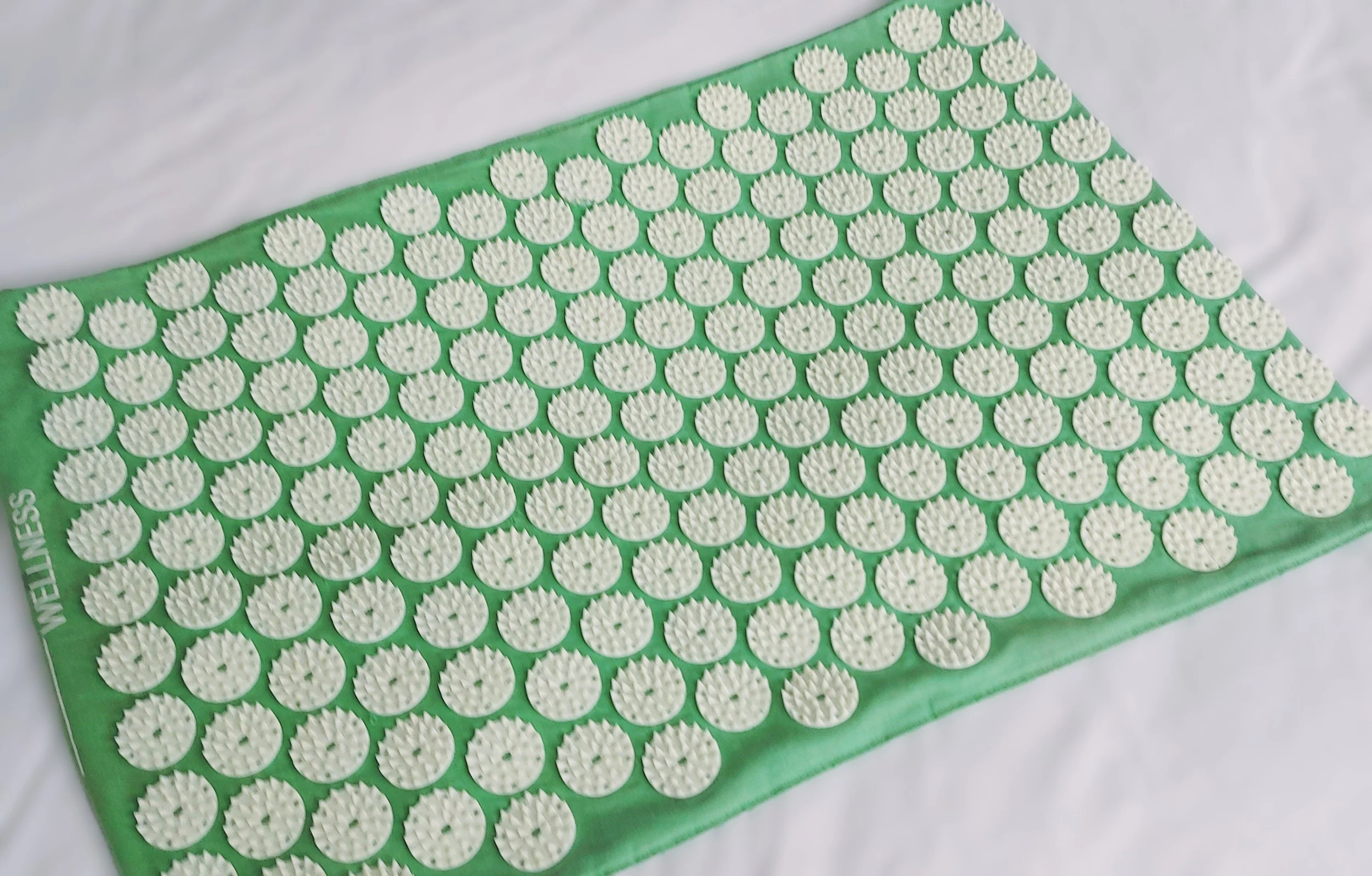
My acupressure mat.
I use it every single night in bed while I am reading.
And after about 15–20 minutes on it, I get this feeling I can only describe as… “vuum.”
Not sleepy.
Not sedated.
Not foggy.Just this deep, grounded, humming calm that spreads through my whole body. Like my nervous system has finally exhaled.
It might look like a medieval torture device (tiny plastic spikes and all 😜), but what it actually does is fascinating.
Very quick nerd alert:
Those little pressure points stimulate your skin and send signals to your brain that shift you into parasympathetic mode - your “rest and digest” state. The same state that lowers stress chemistry, softens muscle tension, and helps with insomnia and 3 a.m. waking.
At first it feels prickly.
Then your body releases endorphins (natural painkillers).
Then you melt.It’s also brilliant for:
• Back and shoulder tension
• Hip tightness
• Stress headaches and pain in general
• General midlife “everything feels tight” syndromeBy the time I get off it, I’m warm, heavy, and halfway to sleep.
It’s not sedation.
It’s regulation.
And because I use it at the same time every evening, my body now associates it with winding down. Spikes = unwind. Unwind = sleep.
I’ve written a full post explaining exactly what’s happening physiologically (and why it’s so helpful for sleep and pain relief).
If you’re curious about the science behind the “vuum” feeling - and why this mat isn’t going anywhere in my routine - you can read the full breakdown in the 10th Feb entry in my journal.
To calmer nights,
Izzy x😜
-
Hi,
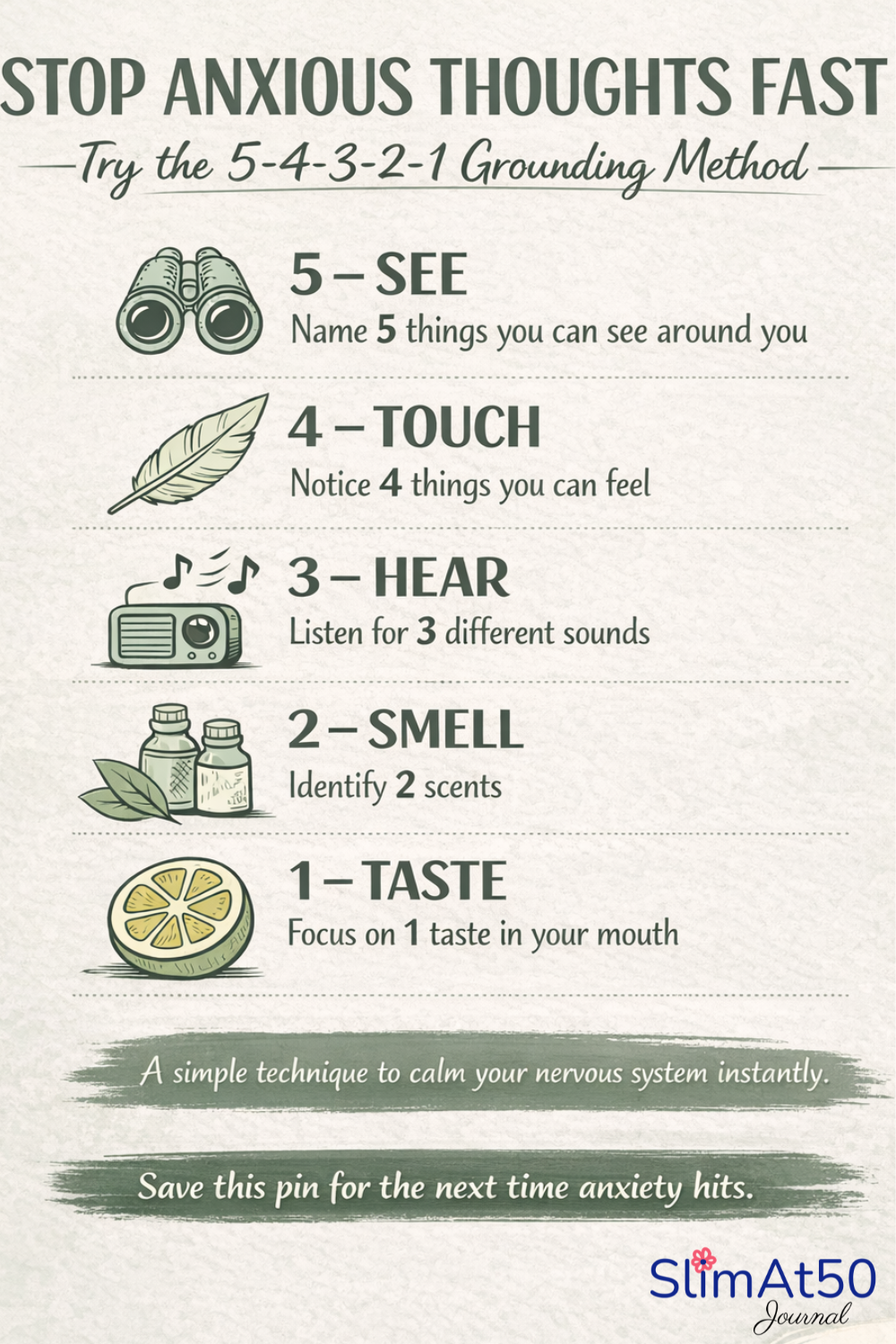
Lately I’ve been exploring ways to support my nervous system and finally stumbled across the 5-4-3-2-1 grounding technique - and I’m absolutely loving it. It’s simple, fast, and feels almost magical when your mind starts racing.
Here’s how it works:
5 – Notice 5 things you can see around you 👀
4 – Feel 4 things you can touch ✋
3 – Listen for 3 different sounds 👂
2 – Identify 2 scents 🌿
1 – Focus on 1 taste in your mouth 🍋This mindful, sensory exercise instantly brings your attention back to the present moment, helping to reduce stress and calm your nervous system - no meditation apps or special tools required.
I’ve been using it before bed or anytime I feel anxious, and it’s really improved my sleep and overall sense of calm. It’s also a gentle reminder that sometimes the simplest wellness tools are the most powerful.
Keep this pin handy so you can try the method whenever you feel your mind racing.
The 5-4-3-2-1 grounding method for instant calm
Stay sparkly,
💛Izzy xx💛
-
I want to share something that’s been a quiet staple in my natural health toolkit for years - Schuessler salts.They’re not as well-known as supplements or herbs, but they’ve been one of the most reliable remedies I’ve used on myself and my children.
What Are Schuessler Salts?
Schuessler salts (also called tissue salts or cell salts) are micro-doses of essential minerals that your body already uses - like iron, calcium, potassium, and magnesium.
The idea is simple:
Instead of giving large doses, you give tiny, highly absorbable amounts to help the body correct imbalances at a cellular level.They’re gentle, safe, and ideal if you’re sensitive to stronger remedies. (Below is a guide on how to use the 12 Schuessler salts)
The One I Always Start With: Ferrum Phos
If there’s one remedy to have at home, it’s Ferrum Phos (iron phosphate).
This is known as the “first aid” tissue salt.
I reach for it at the very first sign of anything, like:
Feeling run down
Slight temperature coming on
Sore throat starting
Early stages of a virus
Earaches in children
It’s especially helpful in the early inflammatory stage, before things fully develop.
Why It Works
Ferrum Phos supports:
Oxygen transport in the blood
The body’s initial immune response
Inflammation balance
It’s often used to help:
Bring down mild fevers
Reduce early inflammation
Support recovery before symptoms escalate
My Personal Experience
I’ve used Ferrum Phos countless times with myself and my children.
So many times we’ve caught things early:
Earaches that never fully developed. Or developed and passed, never requiring antibiotics.
Viruses that passed quickly.
General “coming down with something” moments that just… didn’t.
Then after a couple of days, if symptoms change, I’ll move on to a different tissue salt that better matches what’s going on.
It’s a very intuitive, step-by-step approach. There are guides on how to use them.
Schuessler Salts vs Homeopathy
This part can be confusing, because they look similar - but they’re not the same.
Schuessler Salts:
Focus on mineral deficiencies at a cellular level
Use low potency (usually 6X or 12X)
Work more on physical balance and tissue support
Homeopathy:
Based on the principle of “like cures like”
Remedies are chosen based on symptom patterns (physical + emotional)
Often used in higher potencies
Think of Schuessler salts as:
“Feeding the cells what they’re missing”And homeopathy as:
“Triggering the body’s healing response”Why I Love Them (Especially for Sensitive Systems)
Very gentle and low-risk
Easy to use with children
Great for early intervention
Support the body rather than override it
They work
If there’s one simple natural remedy to keep on hand, I’d say:
Start with Ferrum Phos
It’s not dramatic or flashy - but it’s incredibly effective when used early and consistently.
And sometimes, that’s all your body needs - a small nudge in the right direction.
I also reach for echinacea to give my body a natural boost and rally its defenses.
IMPORTANT
Schuessler salts are taken about 15–30 minutes before or after eating, to support optimal absorption through the mouth lining.
The 12 Schuessler Cell Salts: What They’re Used For
Schuessler salts (tissue salts) are 12 essential mineral remedies used to support the body at a cellular level. Each one targets a specific imbalance and can be used as symptoms evolve.
Here’s a simple guide to what each one is commonly used for:
1. Calc Fluor (Calcium Fluoride)
For elasticity and strength in tissues
→ Skin, veins, ligaments, tooth enamel
→ Useful for varicose veins, stretch marks, and joint looseness2. Calc Phos (Calcium Phosphate)
For growth, repair, and bones
→ Teeth, bones, recovery after illness
→ Helpful for fatigue, growing children, and rebuilding strength3. Calc Sulph (Calcium Sulphate)
For cleansing and healing
→ Skin issues, slow-healing wounds
→ Helps clear infections with discharge4. Ferrum Phos (Iron Phosphate)
The first aid remedy
→ Early inflammation, fevers, infections
→ Use at the first sign of illness (colds, sore throat, earache)5. Kali Mur (Potassium Chloride)
For mucus and congestion
→ Thick white mucus, colds, sinus issues
→ Second stage of inflammation6. Kali Phos (Potassium Phosphate)
For nerves and mental energy
→ Stress, anxiety, brain fog, low mood
→ Great for burnout and emotional fatigue7. Kali Sulph (Potassium Sulphate)
For skin and oxygen transport
→ Yellow mucus, later stages of colds
→ Skin conditions and detox support8. Mag Phos (Magnesium Phosphate)
For pain and muscle relaxation
→ Cramps, spasms, headaches
→ Known as the “natural pain reliever” salt9. Nat Mur (Sodium Chloride)
For fluid balance
→ Water retention, dehydration, dry skin
→ Also linked to emotional balance and grief10. Nat Phos (Sodium Phosphate)
For acid balance
→ Acid reflux, bloating, digestive issues
→ Helps neutralise excess acidity11. Nat Sulph (Sodium Sulphate)
For detox and liver support
→ Water retention, sluggish liver
→ Useful in damp conditions and toxin clearance12. Silicea (Silica)
For strength and elimination
→ Hair, skin, nails, connective tissue
→ Helps push out toxins, splinters, and chronic infectionsHow to Use Them
Start with the salt that matches your current symptoms
Change remedies as symptoms evolve
Can be taken individually or combined
Best taken little and often for gentle support
😄 Happy healing,
Izzy x
-
Let’s be honest - some days just feel heavy.
Low mood, anxiety, hormonal ups and downs… it’s all part of this midlife ride. And instead of pretending I’ve got it all together, I want to share what actually helps me - because chances are, you’ve felt it too.
The First Thing I Always Reach For when I'm low is Flower Essences. Before supplements, herbs or anything else - this is where I start. But quick note as this can be confusing: Flower essences are NOT essential oils.
Essential oils = ароматic, concentrated plant extracts (physical effect)
Flower essences = energetic remedies (emotional effect) - They don’t smell, and they’re not working chemically in the body. Instead, they gently support your emotional state - like nudging you back into balance. Think of them as emotional tuning forks.
If you choose the right one, you feel calmer, lighter, more like yourself.
If you choose the wrong one… nothing happens (no side effects).
My go-to combo:
Rescue Remedy → for stress & overwhelm
Willow → for those “why me?” moods
or when things are really bad:
Emergency or Calm by Australian Bush Flowers
I just add a few drops to water and sip through the day - I feel a shift in 1 or 2 days. Then I can think again. More info here.
Flower essences are often explained through quantum principles-the idea that everything (including us) has an energy field or vibration. When emotions like stress, fear, or resentment take over, that “field” gets a bit out of sync.
Other options:
B vitamins → for energy + stress support
Magnesium complex→ crucial for nervous system regulation and is often linked to depression, apathy, irritability, and anxiety
Vitamin D3 + K2 → for mood + brain health.
Vitamin C→ vitamin C deficiency is often associated with fatigue, depression, and cognitive impairment. Boosting intake can improve mood, motivation, and mental energy
Herbs that are powerful (to be taken over a period of time not as a one off):
Ashwagandha → calming, grounding, great for stress
Rhodiola → amazing when I feel flat and tired
Saffron → not tried it but I'm told it's a surprisingly powerful mood booster
Low days happen. Hormones, stress, life - it all adds up. But having a few gentle, natural tools can make a huge difference. This isn’t about being perfect. It’s about supporting yourself through the wobble. If you’re in a low patch - I see you. And you’re not stuck there. Small shifts. Real support. One day at a time.
To easier days and lighter moods,
x Izzy💛
Find out which adaptogenic herbs I can't live without.
-
You may have noticed I’ve been a little quiet lately with my newsletters… but behind the scenes, I’ve been deep in experimentation mode.
I have been updating my 2026 journal over on slimat50.com, and let’s just say - it’s been a ride!
So what have I been doing?
I’ve been trialling the carnivore diet.
Yes, that one. The all-meat, no-plant, slightly controversial approach that’s gaining serious traction - especially among people trying to heal rather than just lose weight.
And that’s exactly why I’m doing it.
Not for the scales.
For my gut, my hormones, and overall resilience.Why Carnivore?
According to Dr.Paul Saladino and other carnivore proponents, plants aren’t always universally “healthy” because they contain natural defence chemicals - such as oxalates, lectins, phytates, and salicylates -that can irritate the gut, interfere with mineral absorption, or trigger immune responses in more sensitive individuals.
While many people tolerate these compounds well, those with autoimmune issues, leaky gut, histamine sensitivity, or chronic inflammation may experience symptoms like bloating, joint pain, skin flare-ups, or fatigue.
This is why there’s a growing movement using carnivore to calm autoimmune conditions, heal the gut lining, reduce inflammation, stabilise blood sugar, and improve mental clarity.
That said, after reading widely from different doctors and experts, it’s clear this is a highly divided space - with very different opinions on whether removing plant foods is necessary, temporary, or even beneficial long term. (It's worth exploring this if you have long standing health issues).
From the carnivore perspective, high-quality animal foods -especially organic, grass-fed meat - are considered nutritionally dense without the potential irritants found in plants. Advocates like Dr.Paul Saladino often point out that meat provides highly bioavailable forms of essential nutrients such as B vitamins (particularly B12), iron, zinc, and amino acids, along with fat-soluble vitamins like A, D, E, and K2 when nose-to-tail eating is included. Some vitamin C present in organ meat.
Because these nutrients come without compounds (lectins, oxalates, and many other toxins) they’re easier to absorb and less likely to trigger digestive or immune reactions in sensitive individuals.
The two main CARNIVORE camps:
1. The “Animal-Based” Approach (more flexible)
This perspective suggests:Plants contain defence chemicals and some people - especially with compromised guts - react badly to these.
BUT small amounts of fruit, honey, or carbs can support hormones and sleep.
2. The “Strict Carnivore” Approach (zero plant)
This group believes:Plants are largely unnecessary (and often harmful)
Humans thrive best on animal foods alone
Carbs are non-essential, and the body can produce glucose as needed (more on this later)
My Experience So Far
Let me be clear:
This has not been a smooth journey. So exactly what am I eating?I started off full carnivore the first 3 weeks but had to add the carbs as my body was in stress and affecting my sleep. So I am now doing the "animal-based" approach which makes more sense to me.
So now I eat beef, lamb, pork, chicken and as much fat from them as I can. That's very important. I'm not having meat minced or aged because that's high in histamine but it is part of this diet normally. I have to wait a bit longer to be able to reach that point.I can also eat fish and shellfish and eggs (I eat mainly the yolks.) I eat berries, apples and ricotta, white rice, and raw milk before bed and during the day if I feel like it.
This is all in line with Dr. Paul Saladino and Dr. Mercola's opinions. I like these 2 doctors as they base everything on science and are not afraid to change their mind when science also changes its mind ;)
Broths, homemade kefir and other fruit also allowed with this option: avocados, courgette, etc.
If it has seeds, it's a fruit.
It's important to have a lot of non refined clean salt in water (especially the first weeks). I use sunshine salt with added minerals.
I hope to be able to eat offal soon (high in histamine :( as it's full of goodness and I love it.
My Week 1: The Shock Phase
This is where things get real.
I had dreadful fatigue and some light headaches and one day of leg cramps. All very normal.
Why?
Your body is switching from glucose-burning to fat-burning.
Electrolytes drop. Glycogen stores deplete.
Totally normal - but not exactly fun.
My Week 2–3: It Should Get Easier… Right?
That’s what I expected.
But instead?
I hit a wall.
Poor sleep
Wired but tired feeling
Waking in the night
Low energy during the day
At first, I thought:
“Maybe I just need to push through.”But here’s what I discovered…
The Mistake I Didn’t See Coming
When you go carnivore, your appetite naturally drops.
Which sounds great - but it can backfire.
I simply wasn’t eating enough.
Not enough fat… and crucially…Not enough carbs for my body.
The Cortisol - Sleep Connection (This is KEY)
If you go too low-carb - especially in the evening - your body can interpret that as stress.
Here’s what happens:
Blood sugar dips overnight
Your body releases cortisol to compensate
Cortisol wakes you up (often around 2–4am)
So instead of deep, restorative sleep…
You get broken nights and groggy days.
Sound familiar?
The Carb Plot Twist
There’s emerging discussion (and reinterpretation of older research) suggesting something important:
Humans can survive without carbs…
BUT that doesn’t mean optimal function happens without them.Some earlier studies were interpreted as “carbs aren’t needed.”
But what they really showed was:
The body can produce glucose
BUT it is not always ideal or stress-free long-term
More recent perspectives highlight:
Chronic low-carb can elevate stress hormones in some people
Especially women, and especially midlife (🙄)
The cortisol - glucose physiology
Basic endocrinology:
When blood glucose drops, the body raises cortisol to compensate
Cortisol then breaks down tissue (muscle, bone, etc.) to create glucose
This is not controversial - it’s standard physiology.
so..........
My Adjustment (And What’s Working)
I’ve started experimenting with:
Slightly higher fat intake
Adding a small amount of carbs in the evening and some in the morning or lunch time.
And the difference?
Better sleep
Calmer nervous system
More stable energy
The Big Realisation
There is no one-size-fits-all.
Not in midlife.
Not with hormones.
Not with gut health.Some people thrive on strict carnivore.
Others - especially those of us with more reactive systems - need a more nuanced approach.
Where I Am Now
Still experimenting.
Still learning.
Still tweaking.But one thing is clear:
Listening to your body matters more than following any diet rulebook.
If you’re curious about carnivore, gut healing, or finding your own balance - I’ll keep sharing honestly as I go. I can see the light at the end of the tunnel .......
Because the truth isn’t in extremes…
It’s in what actually works for you.
Speak soon,
(And hopefully after a few better nights in a row.)P.S. Check out more info in the journal.
-
Don't Make the Mistake I Made With Echinacea!
I thought I knew exactly what to do when a cold was coming on.
For years, whenever I felt that dreaded scratchy throat, slight sniffle, or "uh-oh, I'm getting sick" feeling, I immediately reached for a high-strength echinacea extract.
And it worked brilliantly.
My colds were usually short, mild, and over before they had a chance to ruin my week. I would often feel better within two or three days.
So when I recently felt a cold coming on, I wasn't worried. (Worth noting I hadn't had a cold for over a year!)
Well, this time, I started drinking organic Echinacea purpurea tea straight away and assumed I was covered.
Big mistake.
I still felt absolutely dreadful. Day after day I kept wondering why my trusty echinacea wasn't doing its job.
Meanwhile, I was drinking tea by the gallon.
Eventually, I decided to investigate.
And what I discovered surprised me.
Echinacea Tea vs Echinacea Extract: They're Not the Same !
It turns out that echinacea tea and echinacea extracts contain very different levels of the compounds responsible for immune support.
One group of compounds, called alkylamides, appears to play an important role in activating and communicating with immune cells, including white blood cells such as macrophages.
These alkylamides are extracted much more effectively in alcohol-based tinctures and extracts than they are in hot water.
In other words, while echinacea tea contains some beneficial compounds, it may not provide the same concentration of alkylamides found in high-quality echinacea extracts.
That's one reason many of the studies showing significant immune benefits used echinacea extracts rather than tea.
The Turning Point
As soon as I realised what was going on, I started taking a high-strength echinacea extract.
The difference was remarkable.
Within about half a day, I could feel things shifting.
My energy started improving, the symptoms began easing, and I finally felt as though my immune system had remembered it was supposed to be fighting.
From that point on, I recovered surprisingly quickly.
There's more....
The next time you reach for echinacea, it may be worth checking whether you're using a tea or a concentrated extract - especially if you're looking for stronger immune support when a cold first strikes.
Because trust me, if you can avoid the mother of all colds, it's well worth it!
It's also worth mentioning that Ferrum phosphoricum (often called Ferrum Phos) is one of my favourite remedies to reach for at the very first sign that something isn't quite right.
In traditional tissue salt and homeopathic practice, Ferrum Phos is considered the remedy for the early stages of inflammation and infection, before symptoms become fully established. It's often used when you feel that familiar "coming down with something" sensation - perhaps a slight sore throat, mild fatigue, a flushed face, or just the feeling that your body is starting to fight something off.
Ferrum Phos is thought to support the body's natural immune response during this initial phase and may help prevent minor ailments from gaining momentum. It's particularly popular for the first stages of colds, flu-like symptoms, ear infections, and sore throats.
Many people (myself included) keep Ferrum Phos in the medicine cupboard because it seems to be most effective when taken early - before symptoms have had a chance to fully develop.
My personal rule is simple: at the first hint of a cold, I reach for both my echinacea extract (my choice is Echinaforce liquid, 40 drops at a time in a mug of hot water so the alcohol evaporates) and Ferrum Phos. (Not at the same time though. Ferrum phos should be taken at least 20 minutes before or after food or drinks.) It's a combination I've relied on for years and one that has often helped me bounce back much faster than expected.
So why didn't I do it this time!!!! 🙄
-
I’m Finally Sleeping Better… But I Had to Break My Own Rules
If you've been following my health diary, you'll know that my goal was never to stay carnivore forever.
My goal has always been to heal my gut, reduce histamine intolerance, and build a body that doesn't overreact to every food I eat.
That's why I moved towards an animal-based diet in the first place.
When the gut is irritated and the immune system is on high alert, some people find that plant compounds, fibre, and high-histamine foods can make symptoms worse. By simplifying my diet, I hoped to reduce the noise and give my body a chance to heal. There is some science behind this btw!
Unfortunately, things didn't quite go according to plan.
A few months ago, I accidentally pushed myself too far into low-carb territory.
The result?
Heart palpitations
Broken sleep
Head pressure and pressure behind my eyes
Night sweats
A nervous system that seemed permanently stuck in "fight or flight"
To calm everything down, I had to do something I hadn't planned on doing.
I added carbohydrates back in.
Not mountains of carbs.
Just enough to convince my body that it wasn't living through a famine.
A little fruit.
Some raw milk.
And white rice with my evening meal.
Slowly, things improved.
The palpitations disappeared.
The head pressure eased.
My sleep became deeper and less fragmented.
Most importantly, my body started feeling safe again.
The Part I Didn't Expect
I also gained a couple of kilos.
My jeans became suspiciously tight and I developed what appeared to be cellulite almost overnight.
Thankfully, most of this wasn't body fat.
When you've been eating very low carb, your glycogen stores become depleted. As glycogen is restored, it pulls water back into the muscles and tissues. The result can be temporary weight gain, puffiness, and tighter clothes while the body recovers.
Was I thrilled?
Not exactly.
But I needed to choose healing over vanity.
The Gut-Healing Phase Has Begun
Now that my nervous system is calmer and my sleep is improving, I've finally started the next phase of the plan.
I've been following a gut-healing protocol for the last 2–3 weeks:
Breakfast
6 MegaMucosa
1 RestorFlora
Lunch
1 MegaSporeBiotic
(All from Microbiome Labs. No, I don't get commission. Although after mentioning them this often, perhaps I should!)
The reason I started with MegaMucosa is that it helps support the protective mucus layer that lines the digestive tract.
Think of it as improving the soil before planting the seeds.
A stronger mucus layer helps protect the gut barrier, reduce irritation, and create a healthier environment for beneficial bacteria to thrive.
Only once I felt stable enough did I begin introducing probiotics.
And for the first time, my body seems able to tolerate them without staging a full-scale rebellion.
My Little Confession
I have to admit something.
I'm cheating.
Well... sort of.
For the last few weeks, I've also been taking a daily light antihistamine.
If you've followed me for any length of time, you'll know that's not usually my style.
I generally prefer natural approaches whenever possible.
But I came to realise that if a short-term antihistamine helps reduce histamine reactivity enough for me to successfully heal my gut, then it's a tool-not a failure.
My plan is to use it for a month while I establish the protocol and then stop.
At that point, we'll find out whether my body has genuinely become more resilient.
What I'm Eating Now
My diet remains mostly animal-based:
Meat and fish
Egg yolks
Ricotta
Blueberries and berries
The occasional organ meat
A little raw milk with coffee in the morning
I've recently added beef kidney and continue eating tongue.
Liver is still waiting patiently in the wings because I suspect it may be a little too much for my system right now.
I've also removed the evening rice again.
The good news?
My sleep hasn't worsened.
To me, that's a sign that my body no longer needs the extra carbohydrate support it needed during recovery.
What I've Learned
Perhaps the biggest lesson from this whole experience is that healing isn't about following a perfect diet.
It's about listening to your body.
Sometimes you need more carbs.
Sometimes you need fewer.
Sometimes you need supplements.
Sometimes you need medication.
And sometimes you need to break your own rules in order to move forward.
Right now, I'm sleeping better, my head feels clearer, and my body is calmer than it has been for months.
The moment of truth will come when I stop the antihistamine.
I'll let you know what happens.
As always, you can read the full journal entries and all the messy details of this experiment over on the blog.
Here's to calmer guts, better sleep, fewer histamine dramas, and making peace with the fact that healing is rarely a straight line.
Now if you'll excuse me, I need to go sit in front of a fan with a bowl of blueberries and pretend 37°C is completely normal.
Until next time,
Izzy xx ☀️😎
Endorphin Activation Station 😜
My “Vuum” Generator